
By Andy Schmitz, Director of Horticulture and General manager
This article was originally published in The Brenton Arboretum’s Fall 2017 newsletter.
In early fall, before the leaves turn color at the Arboretum, many fall fruits appear. There are elderberries (Sambucus), glossy black chokeberries (Aronia), cornelian cherries (Cornus), pecans and shellbark hickories (both Carya), and chestnuts (Castanea) to name a few of the many edible fruits you will find. The buckeyes (Aesculus) are ripening, the first of the black walnuts (Juglans) are starting to fall and the Kentucky coffeetree (Gymnocladus) pods are beginning to change color from green to brown. But one fruit draws my interest more this year: the native pawpaw (Asimina triloba).
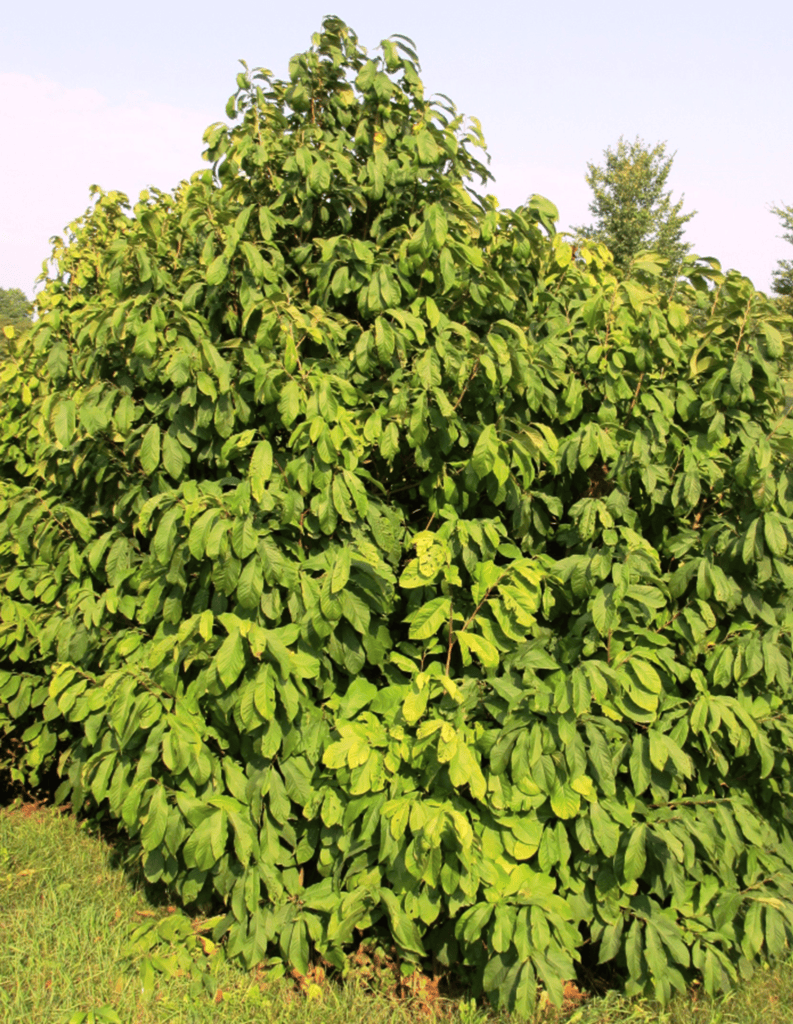
Pawpaw is a member of the “custard apple” family (Annonaceae) which is typically found in the tropics. Our indigenous pawpaw is notable for producing the largest edible fruit native to North America. The pawpaw is a clump-forming shrub or small tree typically found as an understory woody plant in the forests of the central and eastern U.S., including parts of Iowa. The plant is quite common on the east slopes and deeper moist ravines at Waubonsie State Park in Fremont County in the southwestern corner of Iowa. Though it is an understory plant, it can perform well in full sun. You’ll find the Arboretum’s specimens growing in a sunny spot along the south side of the stream to the east of Walnut Bridge.
Pawpaws can reach heights of 15 to 30 feet and as suckering plants may form colonies that wide. They have large leaves up to a foot long, to give them a tropical appearance. Their handsome flowers appear in April or May. The pawpaws at the Arboretum were loaded with blooms this spring which gave rise to lots of fruit. The fruit (which is actually a berry), needs to be well ripened for eating and to appreciate its creamy delicacy and flavors of pineapple, papaya, and banana. If ripe it can be eaten raw right off the tree after removing the skin or can be added to muffins and breads. The center of the fruit is filled with several large dark brown seeds. Watch out for those when taking a bite, but keep them to start your own pawpaw patch.